The End of Fixed-Interval Maintenance?
Why Pharmaceutical Reliability Leaders Are Exploring AI-Driven Maintenance Strategies
At Pharma Maintenance Europe (Berlin, October 2026), one topic consistently captured the attention of reliability leaders… how AI and condition-based maintenance can help reduce risk, improve reliability and extend product life, without compromising compliance.
For pharmaceutical manufacturers, the challenge is clear. Maintenance teams are under constant pressure to maximize plant availability, execute shutdowns seamlessly, control maintenance costs and support increasingly ambitious sustainability targets. Yet many critical products are maintained using fixed replacement intervals, a strategy that often results in unnecessary interventions, excessive component replacement and significant maintenance effort being spent on products that may not require attention.
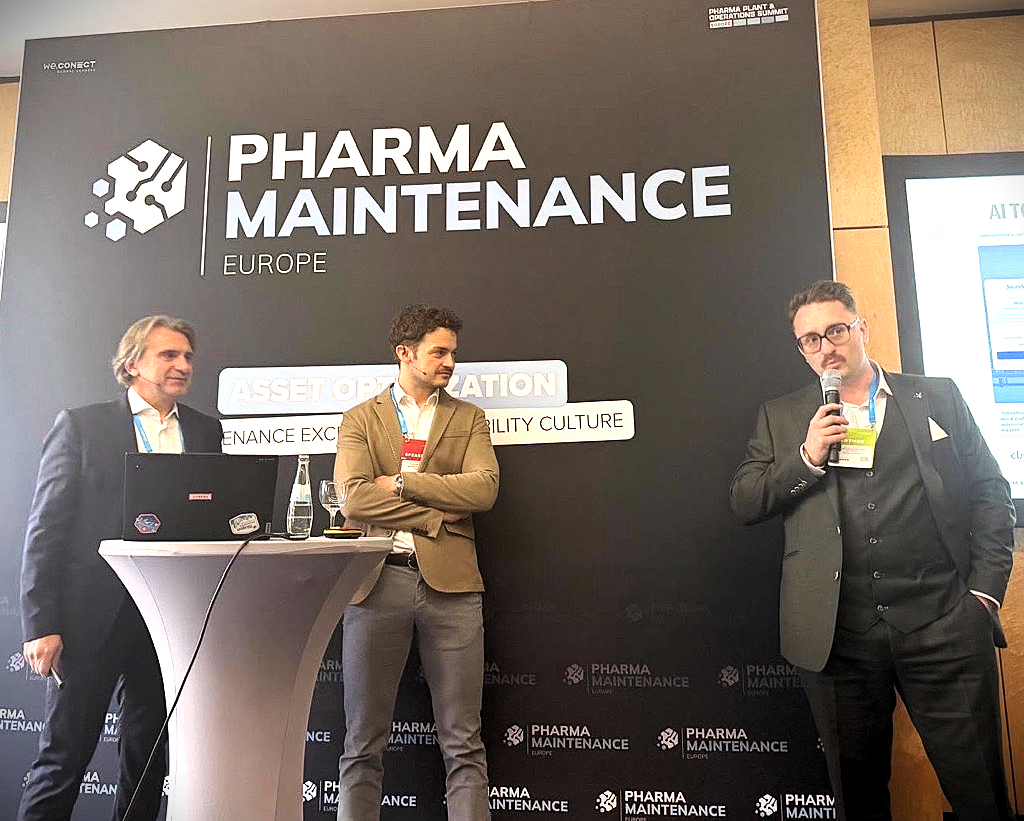
At Pharma Maintenance Europe, one of the event’s most discussed sessions was a collaboration between Biogen and Saunders, exploring how AI-supported condition-based maintenance, could help transform maintenance decision-making for diaphragm valves in pharmaceutical manufacturing. The presentation shared insights from an ongoing project that combines Biogen’s operational asset data, with Saunders‘ diaphragm expertise, to better understand the factors that influence valve performance, degradation and service life. The strong audience response highlighted a growing industry desire to better align maintenance activity with actual product condition.
The Current Risks
Unplanned failures remain one of the largest risks facing pharmaceutical manufacturing operations. At the same time, maintenance shutdown windows continue to shrink, placing greater pressure on teams to make the right decisions, at the right time. Every unnecessary intervention introduces cost, resource requirements and potential process risk, while every missed issue can impact production, product supply and operational performance.
The Biogen Saunders collaboration provides a practical example of how this transition is beginning to take shape. Rather than relying solely on fixed replacement schedules, the project explores how operational data, maintenance history and equipment condition indicators can be used to support smarter maintenance decisions. The objective is to move from traditional time-based maintenance towards a more predictive, data-driven approach that improves equipment reliability, extends service life, reduces unplanned downtime and supports more effective maintenance planning.
For many maintenance leaders attending the event, this real-world application was particularly compelling. The discussion moved beyond theoretical AI concepts and focused on how data-driven approaches can be applied within highly regulated pharmaceutical environments to improve reliability, reduce operational disruption and support more effective asset lifecycle management.
Condition-based maintenance offers an alternative approach. By combining product performance data, operational insights and AI-supported analysis, maintenance teams can gain a deeper understanding of equipment health, identify developing issues earlier, and make maintenance decisions based on evidence, rather than prescriptive schedules.
For reliability leaders, the potential value extends far beyond maintenance efficiency.
Improved asset visibility can help reduce the likelihood of unexpected failures, optimize shutdown planning and focus maintenance resources on the areas that matter most. This enables organizations to improve reliability, while reducing overall maintenance burden and operational risk.
Sustainability and reliability are becoming increasingly connected
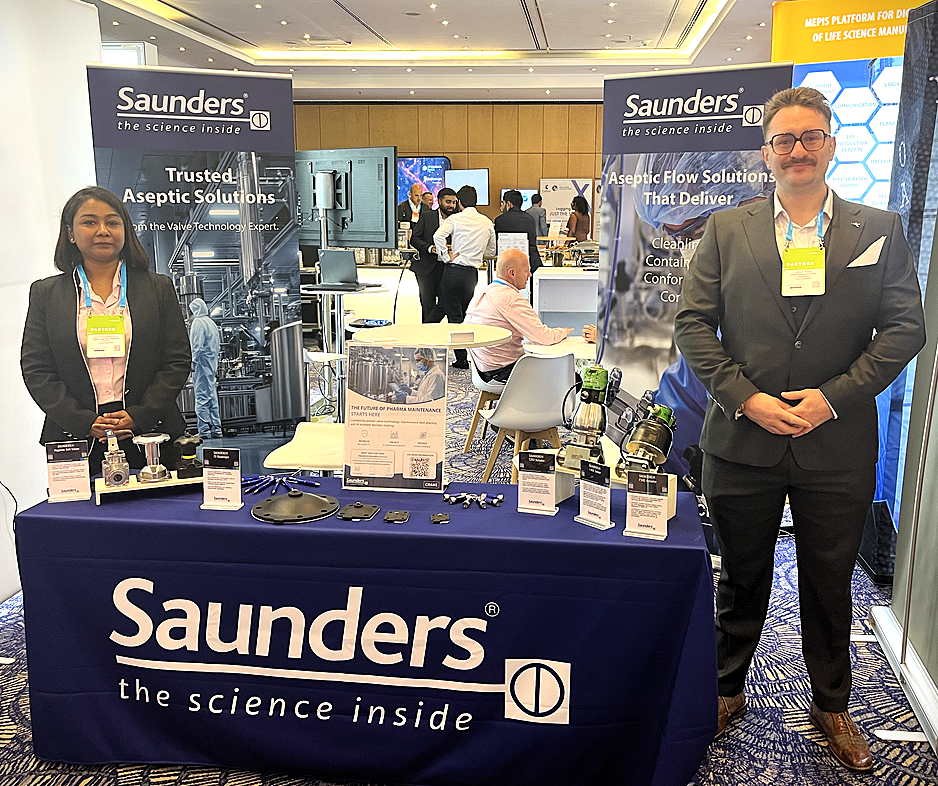
The Saunders EX diaphragm range is designed to deliver extended service life in demanding pharmaceutical applications, enabling manufacturers to extract greater value from installed products, while reducing maintenance frequency.
When combined with AI-enabled, condition-based maintenance strategies, reliability teams can move beyond fixed replacement schedules, extending diaphragm lifecycles, reducing maintenance interventions and lowering waste, without compromising process integrity. This creates a powerful opportunity to improve uptime, reduce shutdown risk and support sustainability goals through smarter product lifecycle management.
What was particularly striking at Pharma Maintenance Europe was the consistency of the conversations throughout the event. Regardless of geography, facility size or product portfolio, reliability leaders shared the same priorities… improve uptime, reduce risk, optimize maintenance resources, and extract greater value from operational data.
The message from Pharma Maintenance Europe was clear. The future of pharmaceutical maintenance is not about doing more maintenance. It is about delivering smarter maintenance, reducing uncertainty and making better-informed decisions. Decisions that improve reliability, optimize product life and support sustainable manufacturing performance.
As pharmaceutical manufacturers continue their digital transformation journeys, AI-enabled maintenance is rapidly moving from an emerging concept to a strategic reliability initiative. The interest generated by the Biogen and Saunders presentation demonstrated that many organizations are actively exploring how operational data, engineering expertise and AI can be combined to improve maintenance decision-making. Those organizations that successfully integrate condition-based maintenance strategies with extended-life technologies such as the Saunders EX diaphragm range, will be well positioned to reduce risk, improve reliability and unlock measurable operational and sustainability benefits, across their manufacturing networks.
Questions for reliability leaders
If your maintenance programme is currently driven primarily by fixed replacement intervals, consider:
- Could asset condition data help optimise maintenance schedules?
- Are maintenance interventions being performed because they are necessary, or because the calendar says they are?
- How much component life remains unused, when parts are routinely replaced?
- What impact could extended-life solutions, such as the Saunders EX diaphragm range, have on shutdown planning, maintenance costs and sustainability objectives?
The question is no longer whether condition-based maintenance is possible. It’s how much value your organisation could unlock by adopting it.
We are seeking additional partners to collaborate with on designing future reliability programs. If you are interested in being a part of this exciting new frontier, contact the Saunders team (SaundersPharma@CraneCPE.com) to discuss.
For additional information, please read more about Saunders here, or, to learn more about Crane ChemPharma & Energy, please visit www.cranecpe.com.
About Crane ChemPharma & Energy
Crane ChemPharma & Energy (within Crane’s Process Flow Technologies segment) designs and manufactures a variety of high-performance products, including valves, pipes, actuation and fittings to name a few. Their trusted brands ALOYCO®, BAUM®, CENTER LINE®, COMPAC-NOZ®, CRANE®, CRANE® CRYOGENICS, CRYOWORKS®, DEPA® & ELRO®, DOPAK®, DUO-CHEK®, FLOWSEAL®, GYROLOK®, GO REGULATOR®, HOKE®, JENKINS®, KROMBACH®, NOZ-CHEK®, PACIFIC VALVES®, RESISTOFLEX®, REVO®, SAUNDERS®, STOCKHAM®, TECHNIFAB®, TEXAS SAMPLING®, TRIANGLE®, UNI-CHEK®, VALVES®, WESTLOCK CONTROLS®, WTA®, and XOMOX® offer customers a complete and innovative portfolio, designed for the most demanding chemical processing, biotechnology, pharmaceutical, oil and gas, refining, power generation, and energy transition applications. For more information please visit: www.cranecpe.com